
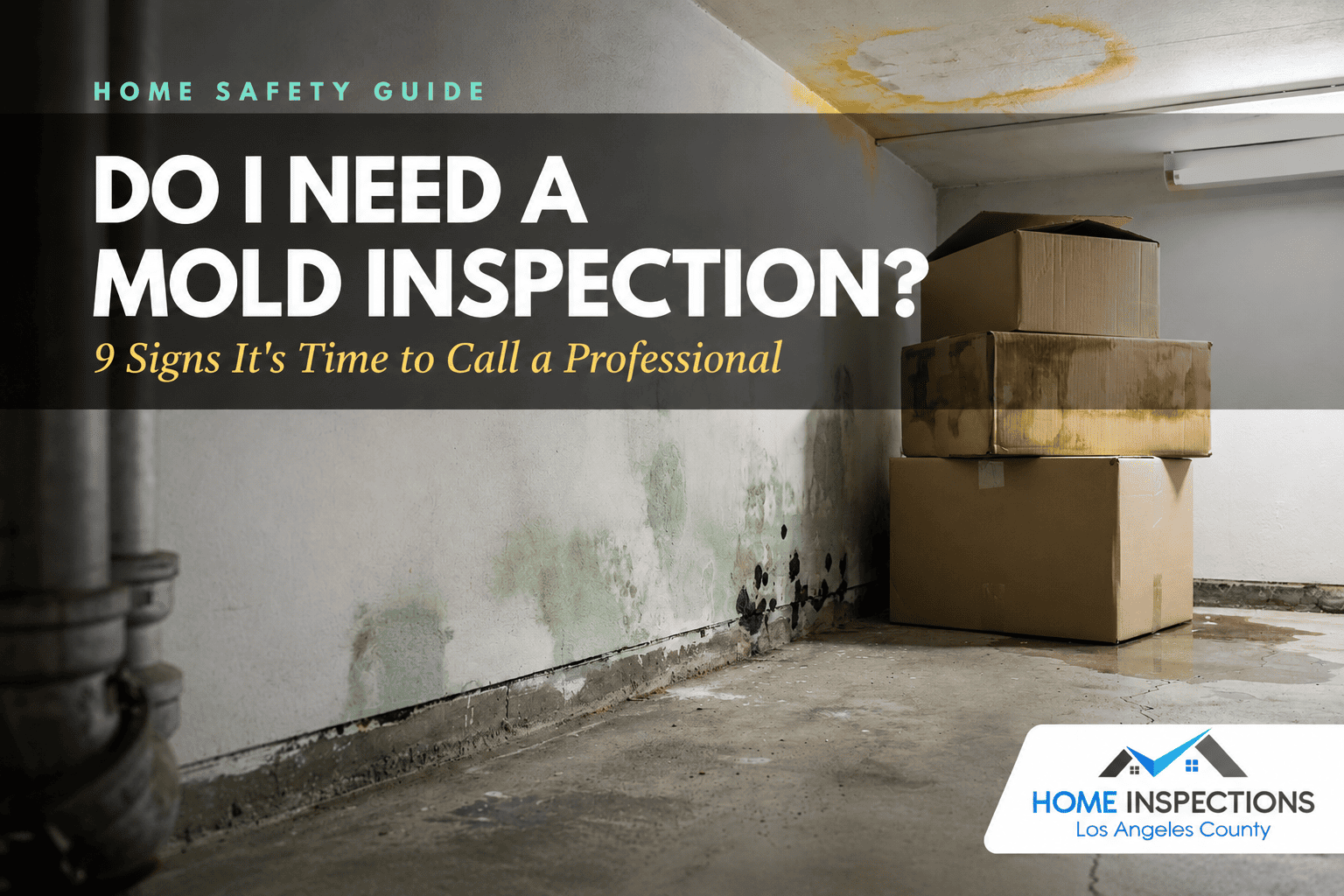
Persistent moisture, musty odors, and water damage are all signs of mold that may indicate a hidden issue within your property. If you’re experiencing these signs, or others such as visible growth or recurring mold, it’s worth arranging a professional mold inspection. Delaying the process can allow moisture problems to spread, increasing both repair costs and the risk of long-term damage.
When Should You Get a Mold Inspection?
Early evaluation often makes a difference when dealing with ongoing mold issues. By combining a house mold inspection with mold testing services, professional home inspectors can identify affected areas, assess overall conditions, and help ensure that remediation efforts target the root of the problem.
9 Signs You May Need a Professional Mold Inspection
If you spot any of these nine signs, it might be time to call in a professional:
1. Visible Mold Growth
If you can see mold on walls, ceilings, baseboards, or other surfaces, there may be more growth than what’s visible. Professional mold inspection and testing can determine the extent of the problem, identify whether mold has spread into hidden areas, and what steps, including black mold removal, might be needed.
2. Persistent Musty Odors
Since mold can sometimes be smelled before it becomes visible, unusual odors are a common reason homeowners seek mold inspection services to locate the source.
3. Water Damage or Plumbing Leaks
Mold can begin developing within days after water damage, which is why affected areas should be evaluated promptly. Even a minor plumbing leak can create enough moisture for mold growth. This makes a professional inspection a wise precaution after any water intrusion.
4. Recurring Mold Growth
If mold keeps returning after cleaning, the underlying moisture source has likely not been addressed. A reliable inspection company can uncover hidden conditions fueling the problem and explain why mold continues to come back.
5. Suspected Hidden Mold
Mold often grows behind drywall, under flooring, and above ceilings where it can’t easily be seen. Signs such as recurring moisture issues or staining may indicate hidden mold, which professionals can locate using specialized inspection tools.
6. Water Stains or Material Damage
Water stains, peeling paint, and damaged drywall can be warning signs of hidden moisture and mold. An inspection can help identify the source and prevent further damage.
7. High Humidity and Moisture Issues
High humidity can cause mold in a house by creating damp conditions that allow spores to thrive. If certain areas consistently feel humid or develop condensation, a professional can help identify potential problem areas before mold spreads.
8. Mold Concerns Found During a Home Inspection
If a home inspector identifies signs of moisture intrusion, poor ventilation, or possible mold growth, a more detailed evaluation may be recommended. The evaluation can help determine the severity of the issue and whether remediation is needed.
9. Buying or Selling a Home With a Mold History
A past mold or water damage issue can increase the risk of recurring moisture problems, making a new inspection a valid step. It can help buyers gain confidence before closing, while sellers can identify and resolve concerns before listing. While many avoid it due to the cost of a mold inspection, it can help prevent unexpected issues during a real estate transaction.
Do You Need a Mold Inspection or Mold Testing?
Mold inspection and mold testing serve different purposes. Understanding the difference can help you determine which service you need.
What Is a Mold Inspection?
A mold inspection examines your property for signs of mold and moisture damage. While many homeowners search for how to inspect for mold on their own, a professional inspection can identify hidden issues that may be easy to miss.
What Is Mold Testing?
The purpose of mold testing is to determine the presence and concentration of mold within a property. It also generates a report on indoor environmental conditions and helps guide next steps.
| Situation | Inspection | Testing |
| You notice a musty odor but can’t find the source | Recommended | Optional |
| You suspect mold behind walls or ceilings | Recommended | Optional |
| You’ve experienced water damage or leaks | Recommended | Optional |
| Visible mold is present, and you want to find the cause | Recommended | Usually unneeded |
| You want to identify the type of mold present | Optional | Recommended |
| You need documentation for a real estate transaction | Recommended | Often recommended |
| You want to measure airborne mold levels | Recommended | Recommended |
| You’re planning remediation and need to assess affected areas | Recommended | May be useful |
What Does a Professional Mold Inspection Look For?
A professional mold inspection goes beyond visible growth to identify moisture sources, concealed contamination, and conditions that allow mold to develop.
Visual Signs of Mold Growth
These may include visible mold, discoloration, staining, or suspicious surface growth.
Moisture and Water Intrusion
This includes leaks, damp materials, water damage, excess moisture, past flooding or plumbing issues, and signs of moisture buildup such as bubbling paint, warping, or damaged window frames.
Areas Where Mold May Be Hidden
These can include areas behind walls, ceilings, floors, crawl spaces, attics, areas with mold under sink cabinets, and within HVAC systems.
Moisture Detection and Other Inspection Tools Professionals Use
To support their findings, inspectors often rely on tools that help locate moisture and assess indoor conditions, including:
- Pinless moisture meters
- Pin-type moisture meters
- Thermal imaging cameras
- Hygro-thermometers
Additional tools used during inspections may include:
- Borescopes/inspection cameras
- Air sampling pumps
- Surface sampling tools
- Particle counters
What Happens During a Professional Mold Inspection?
An inspection for mold typically involves the following steps:
Initial Consultation
First comes a conversation. The inspector asks about past leaks, flooding, unusual odors, recent repairs, and any recurring issues you’ve noticed. Those details often point toward problem areas and help guide the inspection.
Property Assessment
Then the walkthrough begins. The inspector checks living spaces, attics, basements, bathrooms, kitchens, and other moisture-prone locations. Stains, discoloration, damaged materials, and visible growth receive close attention during this stage.
Moisture Investigation
Inspectors evaluate moisture conditions that may contribute to mold growth. Specialized tools can help identify hidden moisture and support a more thorough assessment of the property.
Sample Collection
When additional confirmation is needed, inspectors may collect air or surface samples. These samples can help identify mold types, compare mold levels, and assess conditions in specific areas of the property.
Laboratory Analysis
Collected samples go to a certified laboratory for analysis. Specialists examine the material, identify mold types, and review spore concentrations. The results provide a clearer picture of indoor conditions and contamination levels.
Inspection Report and Recommendations
Once testing and evaluation are complete, you receive a detailed report. It outlines findings, highlights moisture concerns, and identifies affected areas. The report also provides practical recommendations for cleanup, repairs, or further remediation when necessary.
How Much Does a Mold Inspection Cost?
For most residential properties in Los Angeles, mold inspections cost a few hundred dollars, while larger properties or more complex cases can cost significantly more.
While these figures provide a general estimate, the actual cost for a mold inspection depends on multiple factors, including:
Size of the Property
Larger properties generally require more extensive inspections, which can result in higher inspection fees.
Number and Type of Lab Tests
Air samples, surface samples, and additional testing increase overall inspection costs.
Type of Mold Suspected
Certain types of mold may require additional testing and analysis, which can increase inspection costs.
Accessibility of the Mold
Mold suspected behind walls or within crawl spaces often requires a more extensive evaluation, resulting in a higher mold inspection cost.
Type of Technology Used
The use of advanced equipment, such as thermal imaging cameras and moisture meters, may result in higher inspection costs.
How to Choose a Mold Inspection Professional?
If you’ve been searching for a professional mold inspection near me, don’t simply choose the first company that appears in the results. Take a close look at the following before hiring someone to inspect your property:
What to Look For
Choose an independent inspector or a trusted mold inspection company with industry certifications and hands-on experience. Also, check for professional liability insurance and confirm they work with accredited laboratories for sample analysis. A qualified inspector should provide a detailed report that explains the findings, identifies moisture sources, highlights affected areas, and outlines recommended next steps.
Conclusion
Mold problems are not always visible, which is why a professional inspection can be valuable when you notice signs such as musty odors or water damage. By identifying the source of the problem and assessing affected areas, an inspection helps you make informed decisions about cleanup, repairs, and next steps. Taking action early can help prevent larger problems, reduce repair costs, and provide peace of mind.
Frequently Asked Questions
How do I get started with mold inspection and testing?
Start by scheduling a professional evaluation of the affected property. The inspector will discuss your concerns, perform a visual assessment, check for moisture issues, and recommend testing if additional confirmation is needed.
How much does mold inspection cost?
In Los Angeles, a standard residential mold inspection typically costs between $300 and $700. Larger properties, commercial buildings, or inspections requiring extensive testing often cost more.
What affects the cost of a mold inspection?
Several factors influence pricing, including property size, the number of samples collected, accessibility of affected areas, suspected mold severity, and the use of specialized equipment or laboratory testing.
How important is a mold inspection?
A mold inspection is important because mold is not always visible. It helps detect hidden growth, identify moisture sources, and prevent minor issues from developing into larger property damage or remediation concerns.
How long does a mold inspection take?
Most residential mold inspections in Los Angeles take between 2 and 4 hours to complete. When laboratory testing is required, results and the final report are generally provided within 1 to 3 days.