
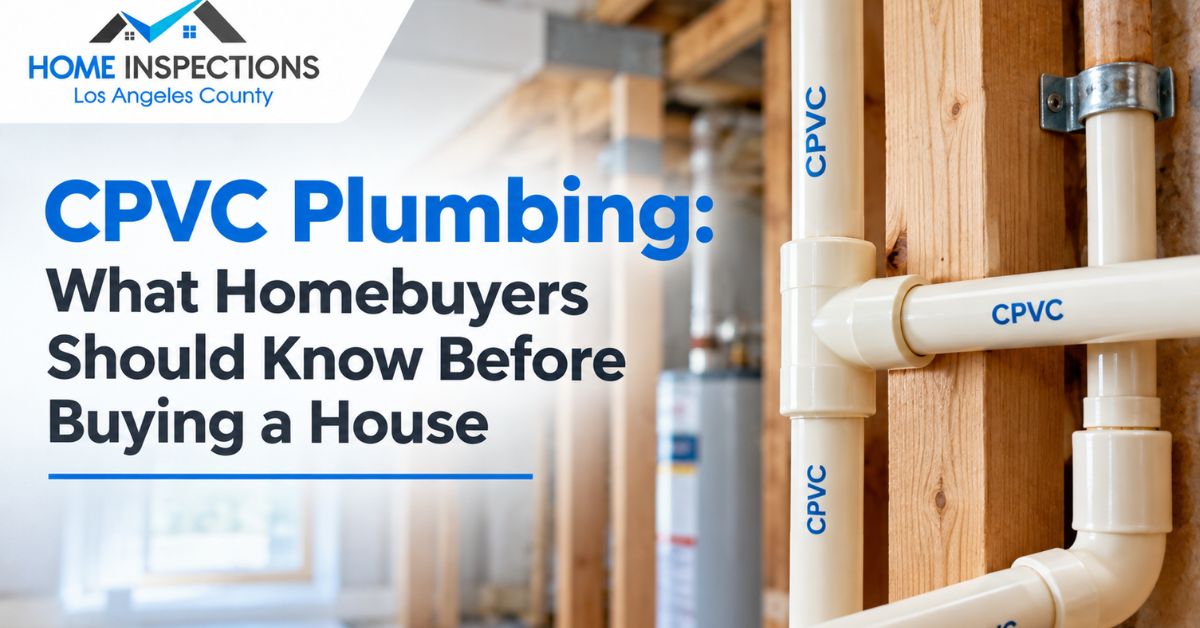
During a home inspection before buying, you may find CPVC plumbing supplying water throughout the house. Seeing plastic piping might raise concerns about leaks or durability. It may also raise concerns about future repair costs. What buyers should know is that CPVC is an approved material for residential water distribution, so its presence alone does not signal a problem. What matters is the pipe’s condition and installation, which deserve closer attention before you buy.
What Is CPVC Plumbing?
CPVC stands for chlorinated polyvinyl chloride. The material belongs to the same plastic family as PVC but receives additional chlorination, which increases its temperature resistance. As a result, CPVC suits residential hot and cold water supply systems. A CPVC pipe installation typically includes pipes, fittings, and solvent cement connections. Together, these components distribute water to fixtures throughout a property. Builders and homeowners often use CPVC because the material weighs less than many traditional piping options and resists corrosion.
Is CPVC Plumbing a Problem When Buying a House?
CPVC plumbing itself is not necessarily a problem. Its current condition is what matters. In an older home, this type of plumbing warrants careful inspection because CPVC pipes can become more brittle with age, making cracks and leaks more likely. Still, an older CPVC system does not automatically need replacement.
During a home inspection of a property with CPVC plumbing, inspectors look for visible cracks, leaks, damaged fittings, and poor support. They also look for signs of previous repairs, especially around joints and connections. These details provide a better picture of the system than the presence of CPVC alone.
So, should you buy a house with CPVC plumbing? The material alone does not mean you should walk away. Have the inspector assess the system and document any visible problems. If you find significant deterioration, leaks, or previous repairs, consider the potential cost of addressing those issues before buying.
5 Things Inspectors Look for in CPVC Plumbing
An inspector checks accessible areas of a CPVC plumbing system during a professional home inspection or detailed plumbing inspection to identify visible issues and installation concerns.
1. Physical Damage
A home inspector looks for visible cracks or other physical damage. Brittle or damaged sections get more attention as they can lead to leaks and further plumbing problems.
2. Leaks and Water Damage
Inspectors also look for visible signs of current or previous leaks. Nearby water areas are also checked for signs of water damage.
3. Fittings and Connections
Fittings and connections are reviewed for visible installation problems. Loose or poorly connected joints might indicate a plumbing issue that needs further attention.
4. Pipe Support and Installation
The support the pipes have and their installation are carefully reviewed. Sections that sag or do not have adequate support might experience added stress, especially around connected sections.
5. Signs of Previous Plumbing Repairs
Previous repairs can offer clues about the plumbing system’s history. Inspectors look for repaired or replaced sections that might indicate earlier problems.
Common CPVC Plumbing Problems Homebuyers Should Know
Homebuyers in Santa Clarita or anywhere in LA should know about these common CPVC plumbing problems before buying a house:
- Extreme brittleness with age
- Chemical incompatibility
- Heat and chlorine stress
- Cascade failures during repair
- Leaking connections
- Damaged fittings
- Improper installation
- Poor pipe support
- Cracked or split pipes
Additionally, homebuyers should watch for these common red flags in CPVC plumbing:
- Yellow or cream discoloration
- Chalky texture
- Hairline cracks
What Should You Do If a Home Inspection Finds CPVC Plumbing?
Don’t just say no to a property just because it has CPVC plumbing. Instead, do the following:
Get a Professional Assessment
Get a licensed plumber to review the system. A closer assessment helps identify brittle pipes, stress, poor installation, and issues near fittings or the water heater.
Check Your Insurance Coverage
Ask your insurance company how CPVC plumbing affects coverage for potential water damage. Confirm any requirements for older piping, repairs, or replacement rather than making assumptions about your policy.
Discuss Repairs with the Seller
Review the inspection findings before finalizing the purchase terms. You could ask the seller to address repairs or offer a credit based on the plumbing condition.
Consider Future Replacement
Replacement does not always need to happen immediately. If the system shows significant age or deterioration, ask a qualified plumber about expected service needs and replacement costs. PEX or copper could be options depending on the existing plumbing and local requirements.
Final Verdict: Should CPVC Affect Your Home Buying Decision?
CPVC plumbing should be treated as a reason to investigate further, not as an automatic reason to reject a home. Consider the piping’s age, visible condition, installation, and repair history. Aging CPVC tends to become more brittle, which increases the potential for cracks and leaks.
Be sure to add these items to your home inspection checklist so you can cross-reference them with any plumbing concerns noted in the final report. A water damage inspection also helps identify evidence of leaks in accessible areas.
Lastly, use the inspection findings to plan for possible repairs and discuss relevant costs with the seller. Scheduling a professional home inspection before closing helps you make the purchase with a clearer understanding of the plumbing condition.
Frequently Asked Questions
Is CPVC a problem in an older home?
CPVC is not automatically a problem in an older home. However, aging pipes warrant closer inspection for brittleness, cracks, leaks, and signs of previous repairs that could affect their condition.
Is CPVC plumbing safe?
Yes, CPVC plumbing is generally considered safe for residential water distribution when properly installed and maintained according to applicable plumbing codes and manufacturer requirements.
Should you avoid buying a house with CPVC plumbing?
No, you do not need to avoid a house solely because it has CPVC plumbing. Review its age, condition, installation quality, and repair history first.
What problems do inspectors look for with CPVC?
Inspectors look for visible cracks, leaks, damaged fittings, poor support, discoloration, improper installation, and signs of previous repairs in accessible CPVC plumbing.
Should I hire a plumber after CPVC is identified?
Consider hiring a licensed plumber if the inspection identifies concerns. A plumber can assess the piping more closely and identify issues requiring further attention.
How long does CPVC plumbing last?
CPVC plumbing does not have one fixed lifespan. Service life depends on installation, water conditions, temperature, exposure, and maintenance.